


If anyone walks in here expecting formality, they’ll be disappointed, says Christopher Ciccone of the Mediterranean-style villa he decorated for his elder sister, Madonna. ‘This is a beach house.’
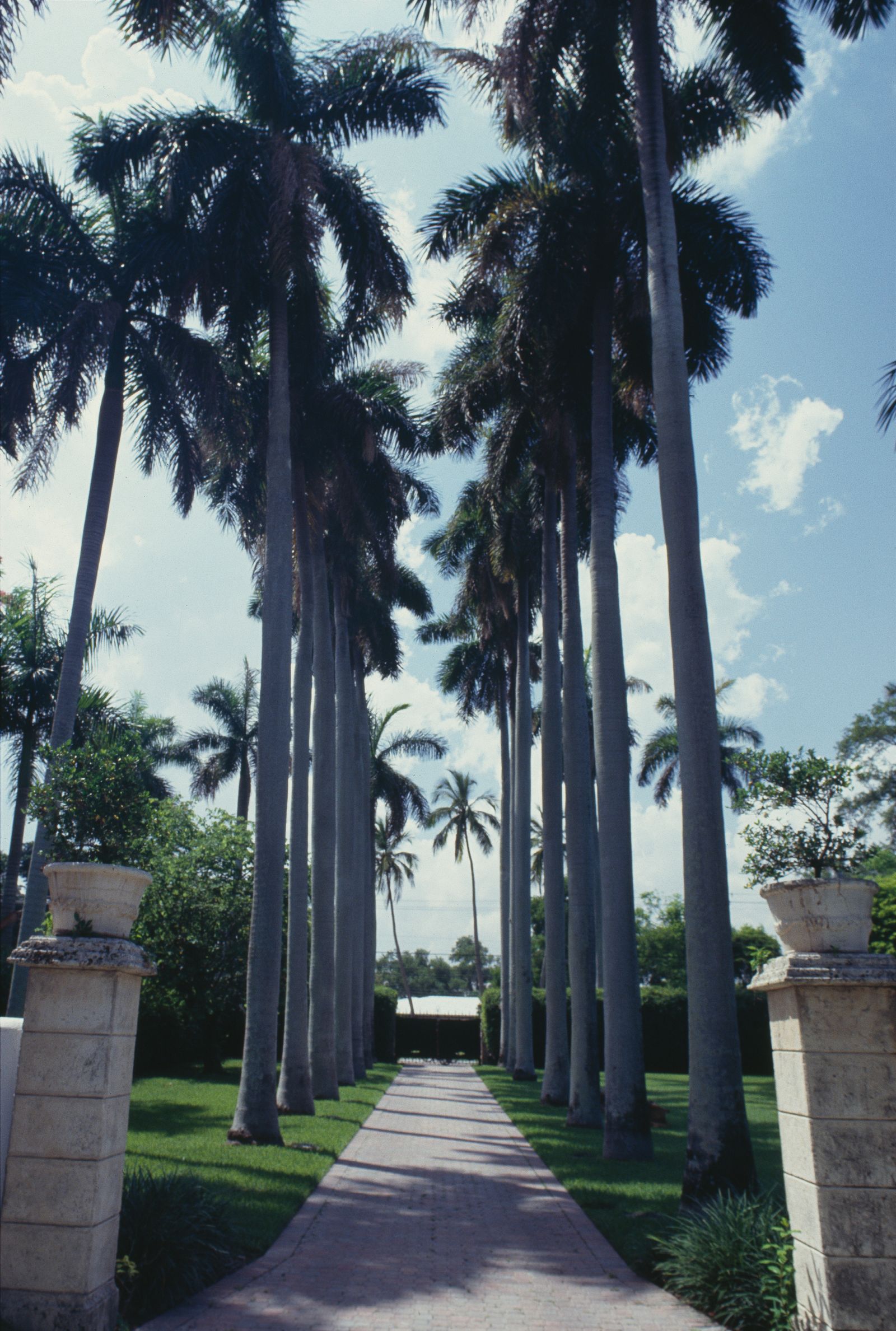
Built in 1931 on the Miami equivalent of Park Avenue, the house stands sedately on a couple of semi-secluded acres that stretch down to Biscayne Bay. The stucco exterior with its coral Keys stone lintels and barrel-tiled roof is guarded by two rows of majestic 60-foot-high royal palms that line the cobblestone driveway. Bougainvillea, cycads, tea roses, lemon, orange and avocado trees and a wildly unkempt rosemary bush thrive effortlessly in this subtropical zone. The English gardener is keen to tame and order the grounds but Ciccone won’t let him. Let’s not forget. It’s a beach house.
Sylvester Stallone’s compound is a stone’s throw away, close enough for Madonna to amble over and borrow a proverbial cup of sugar, if she so desired. The actor’s lavish estate, Casa Rocko – the words are ostentatiously welded atop his front gate – apparently houses Louvre-quality art, a dicey decorating decision in this hurricane-tormented part of the world. By contrast, Ciccone respected the forces of nature and furnished his sister’s villa unpretentiously.
As the story goes, it was the daughter of wealthy industrialist James Deering who first occupied Madonna’s house. Mr Deering laid claim to a nearby 180 acres of tangled, isolated mangrove in 1914 and broke ground on a 70-roomed, Italian Renaissance mansion where he intended to winter. The sea wall and tea pavilion of Deering’s Villa Vazcaya, now a museum, is visible from the deck of Lola, Lola, the pleasure craft Madonna keeps in the Bay, moored to her private jetty.
When the performer commissioned her brother to find her a hideaway, a place to pit-stop during the rigorous world tours that Ciccone art directs, he took his work seriously. He viewed a dozen sites and trekked as far as Antibes. He settled on Miami because of its proximity to New York, where Madonna lives most of the time, and fell for this particular estate because of its tranquil surroundings and unobstructed view of the Bay. Ironically, now that her retreat is finished, Madonna has decided never to tour again.
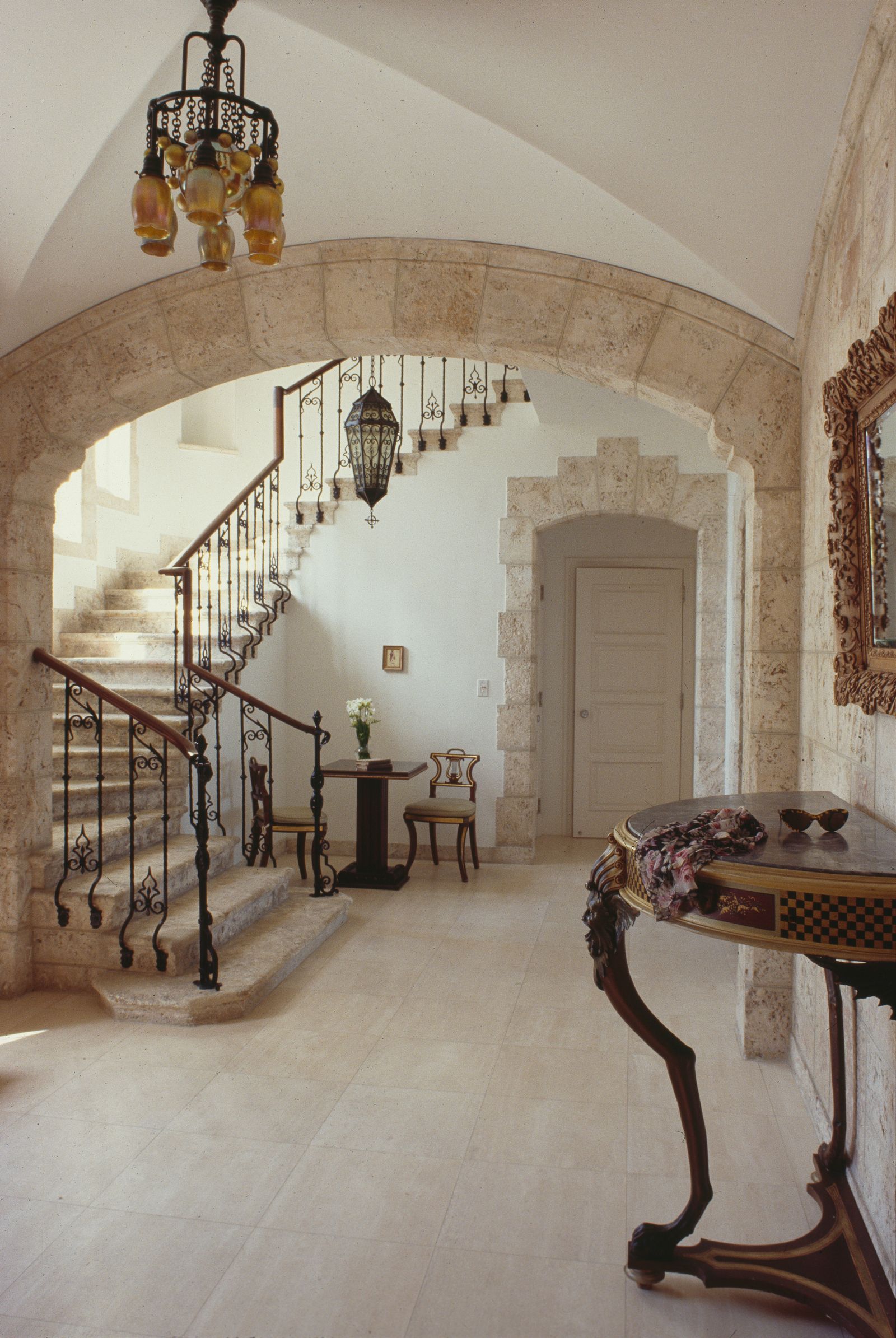

Earlier occupants, the camera people Bell & Howell, subtly worked the initial ‘H’ into the wrought-iron front gates of the property that are now only penetrable by means of a remotely operated, Fort Knox-style security system. As a nod to the current owner, Ciccone changed the ‘H’s to ‘M’s. ‘Every room looked like a Seventies nightmare,’ recalls Ciccone. ‘There was carpeting throughout, built-in closets and customised beds boarded in by ugly, yellow oak panelling.’
Did Madonna provide him with an endless list of requirements? ‘No. She used two words, “ease” and “comfort”, and I knew exactly how to interpret them,’ says Ciccone. Another thing was understood. Miami should contrast sharply with Madonna’s other two homes. In her Manhattan duplex Ciccone knocked six apartments into one and created an early art-deco backdrop for a collection of paintings by Léger, Picasso and de Lempicka. He transformed her Los Angeles, Italianate house into a baronial set. ‘It is Hollywood, after all,’ he adds wryly.
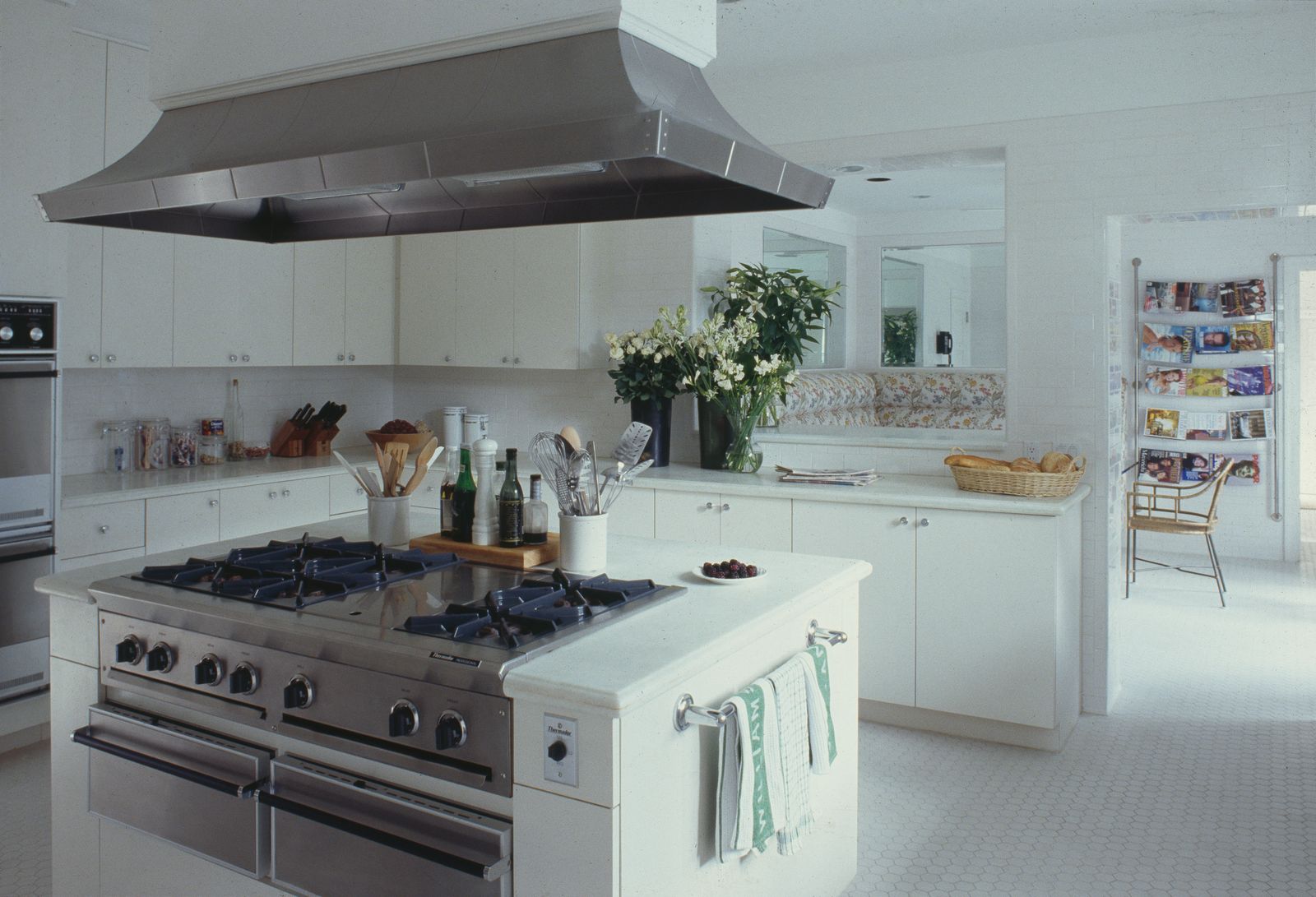
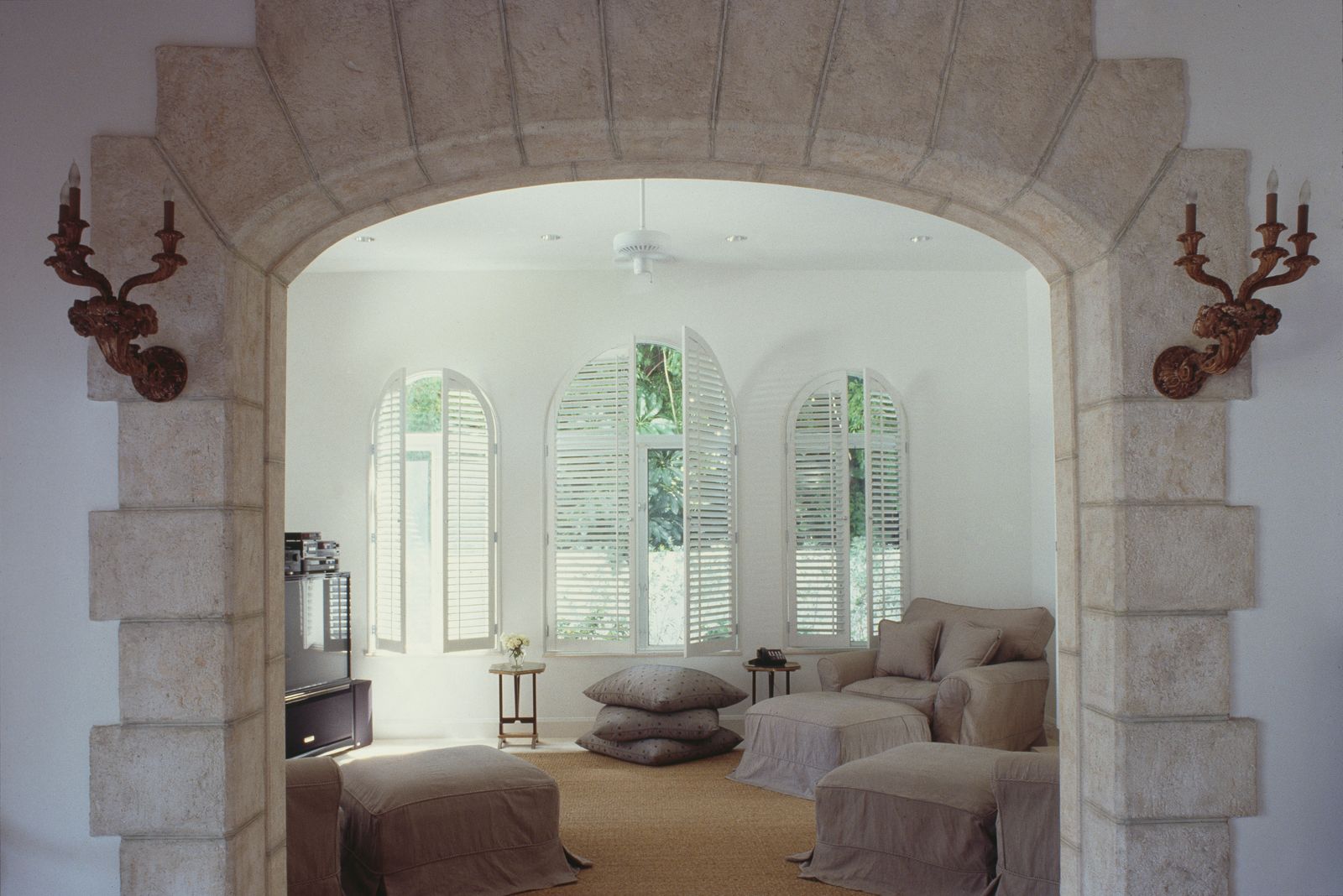
The neutrality of the elegant, simple stunning interior of the Miami villa was dictated by the living room’s creamy-coloured stone floors, stripped oak, coffered ceiling and local Keys stone fireplace. An unlikely location for some of the shots in Madonna’s notorious Sex book, it’s more Grace Kelly than soft porn. Deliberately deep, over-stuffed sofas, casual groupings of ottomans, armchairs and floor pillows framed by seagrass mats encourage visitors to stay awhile, true to southern hospitality. ‘There’s nothing in here that assaults the eye because the view from each window is so stunning. The vivid colours are outside, so why compete?’ he says. Neutrals also never upstage. Here, everyone is a star.
By contrast, the dining room is very straight backed. An imposingly large, black walnut table, an auction find whose mechanical leaves unfold origami-style, seats twelve on ornately-carved, courtly chairs. At dinner parties, the table is anchored by 17th-century altar candlesticks that cast the room’s only light, and vases are crammed with fistfuls of tuberoses and gardenias. Inside and out, Madonna insists on white flowers.
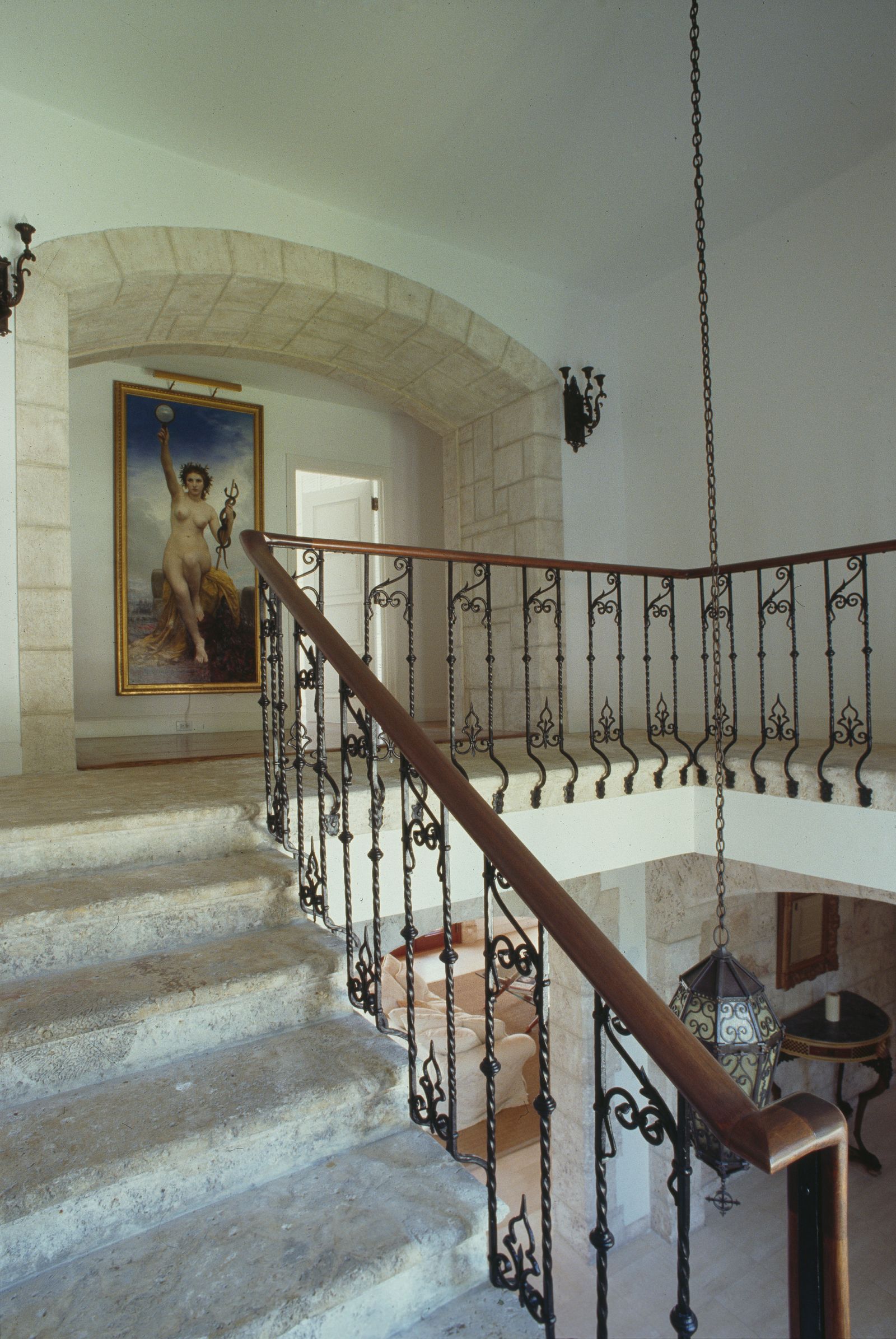
Then there’s the unexpected upholstery of the chair seats. Rather than velvet or textured brocade, Ciccone used classic beach-house fabric, ticking. His selection of artwork throughout the house is just as light-hearted. Nineteenth-century buxom nudes bathe in or pose close to water. Pulcinelli cavort on a swing or play music.
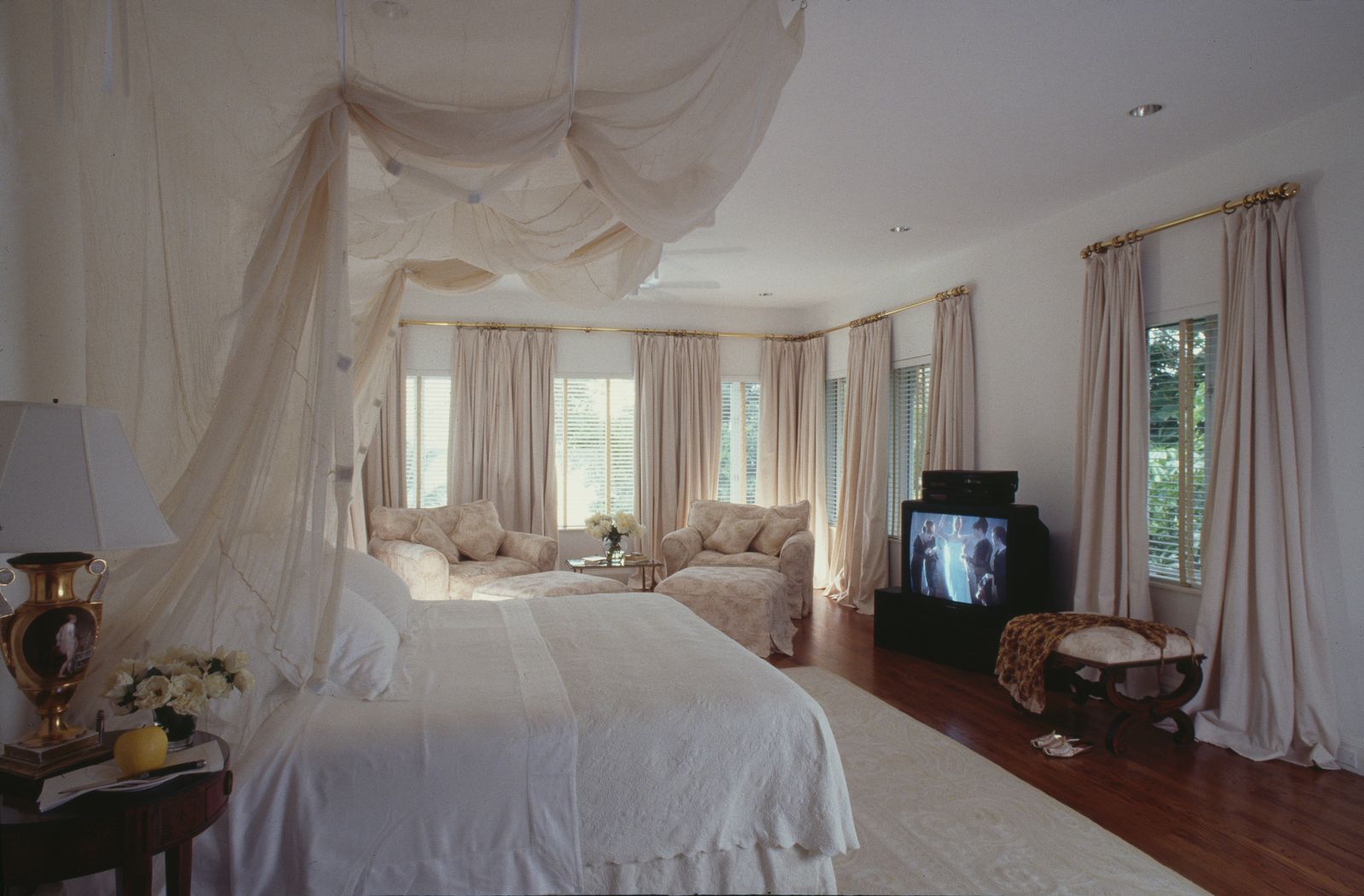
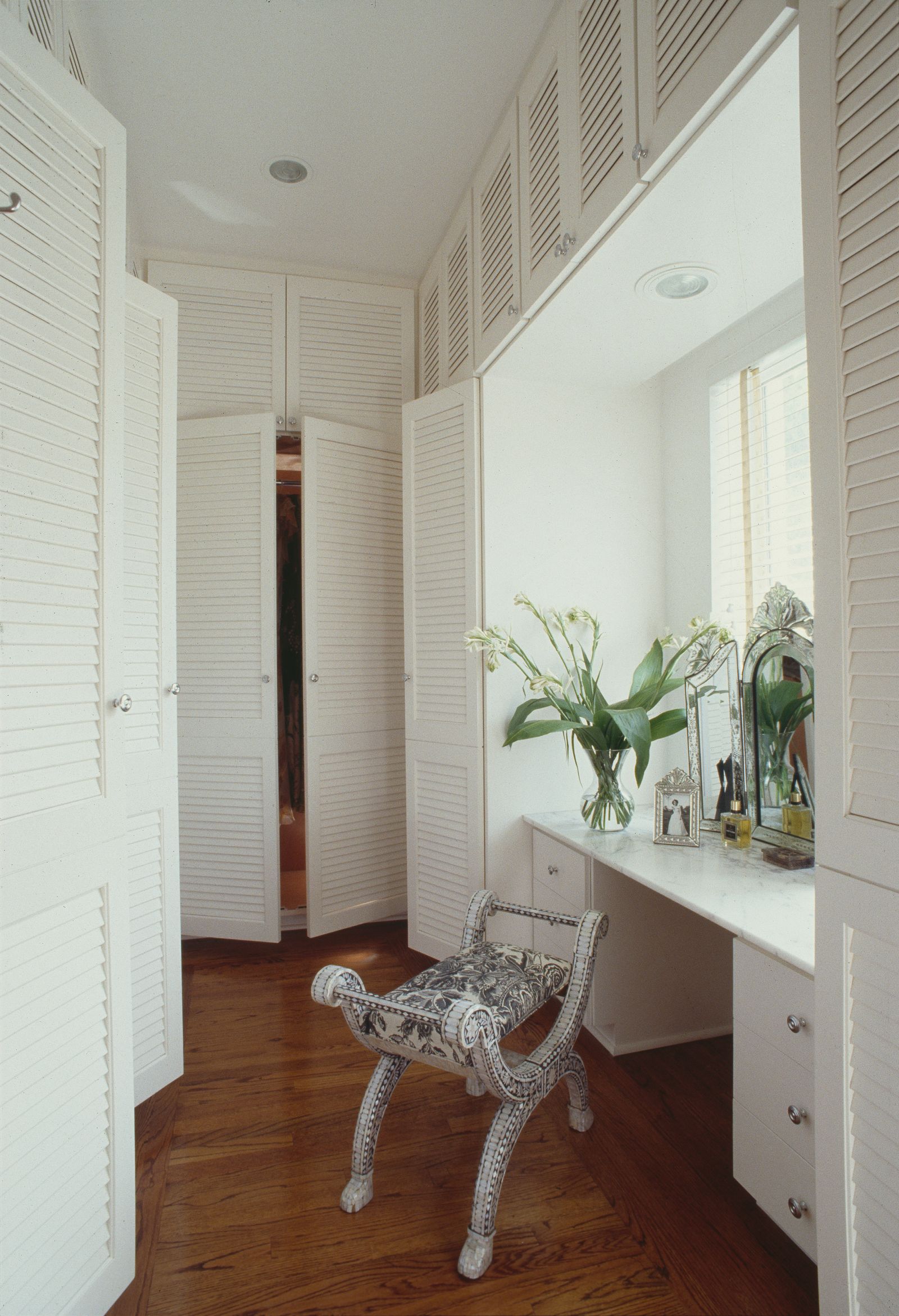
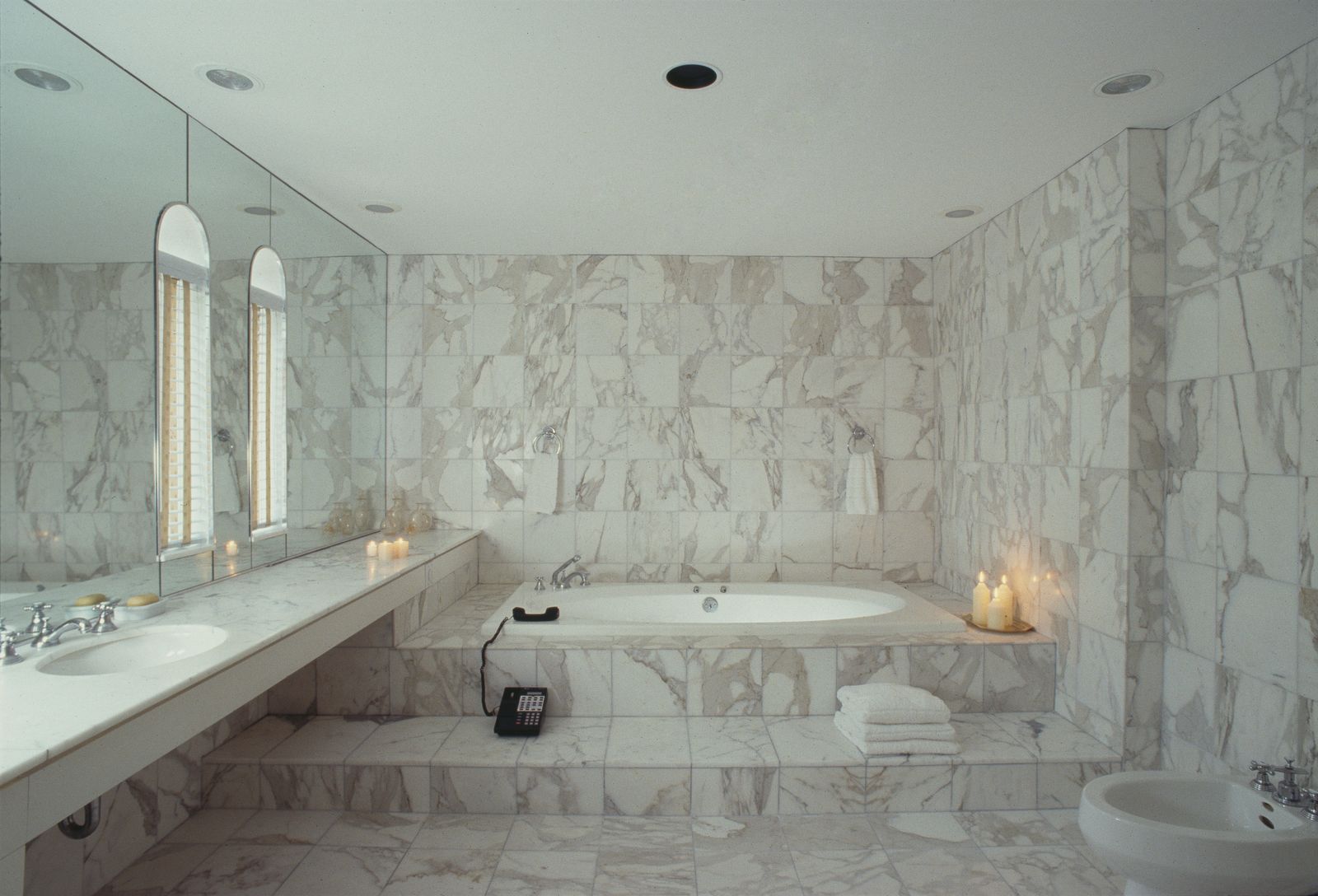
On the second floor, six bedrooms can accommodate upwards of ten guests. All the beds are made with luxurious, cotton Frette sheets, no doubt as a reaction to the blended bed linens the ten Ciccone brothers and sisters grew up with. Decorative mosquito netting – Miami is a bug haven – droops languidly from the ceiling above each bedhead and is used religiously by Madonna. Even when the summer’s blistering heat and unbearable humidity peaks, her air-conditioner is turned off and the windows placed ajar. The mistress also requires pitch blackness in order to sleep, so Ciccone installed heavy lined and interlined curtains in the master bedroom. Guests contend with wooden blinds and are woken by the sun.
The garage outside houses a Range Rover and a white ‘67 Mercedes convertible as well as an adopted white and grey cat named Puta. Other members of the animal kingdom occupy the grounds – prehistoric lizards dart through the lower foliage while families of parrots have commandeered the trees – but Puta is the undisputed queen. She holds court on the roof of Madonna’s convertible, which thanks to her has taken on the appearance of fluffy angora and needs regular vacuuming.
There are various thoughts about why the place is so relaxing. One is the soothing colour palette used in the uncluttered interior. Then there is the heady aroma of the citrus, jasmine and gardenias outside. Whatever it is, if anyone walks in here expecting informality, they wont be disappointed. It’s a beach house after all.
A version of this story appeared in the September 1994 issue of ‘The World of Interiors’. Learn about our subscription offers


